
Is Maltodextrin Bad for You? Blood Sugar, Gut Research and Labels
What maltodextrin is, why it raises blood sugar quickly, what lab and mouse studies suggest about the gut, whether it's gluten-free, and how to spot it.
Quick answer: Maltodextrin is a starch-derived carbohydrate the FDA lists as generally recognized as safe. Its glucose is absorbed quickly, so it can raise blood sugar fast, which matters if you have diabetes. Some mouse and lab studies link it to gut inflammation, but human evidence is lacking. Most people don't need to fear it, but it's worth noticing on labels.
Maltodextrin turns up on a long list of packaged foods, and claims about it online range from harmless filler to worse than sugar. This guide sorts what regulators and researchers actually say from what is still being studied. It is general information, not medical advice.
What is maltodextrin?
Under US rules, 21 CFR 184.1444, maltodextrin is a "nonsweet nutritive saccharide polymer": a chain of glucose units with a dextrose equivalent below 20. It is made by partly breaking down corn, potato or rice starch with acids and enzymes, and it is affirmed as GRAS with no limit other than good manufacturing practice. Labels also show maltodextrin made from other starches, such as tapioca or wheat.
Manufacturers use it to add bulk and body, to carry flavors and sweeteners, and as quick energy in sports products. It is a digestible carbohydrate with calories, like other starches, not a fiber.
Maltodextrin vs sugar: what happens to blood sugar
A 2016 review in Critical Reviews in Food Science and Nutrition explains that glucose from digested maltodextrin is rapidly absorbed in the small intestine. The authors note that swapping unprocessed starch for maltodextrin may raise the glycemic load of a food and blood sugar after meals, which they describe as less desirable for health.
You will see very different glycemic index figures for maltodextrin online, and they vary by product, so treat any single number with caution. What matters more is the amount. A sweetener packet contains very little. A sports drink, energy gel or weight-gainer powder can contain a lot.
On the Nutrition Facts panel, the Sugars line counts mono- and disaccharides such as glucose and sucrose. Maltodextrin is a longer chain, so check Total Carbohydrate as well, not just Sugars. If you have diabetes, our guide to diabetes foods to avoid and our page on maltodextrin and insulin-dependent diabetes go further, and your care team can tell you how it fits your plan.
Does maltodextrin harm the gut? What the research shows
This is where most of the alarm comes from, so it helps to look at what kind of studies the claims rest on.
Bacteria in the lab
A 2012 study in PLoS One by researchers at the Cleveland Clinic found that, in lab cultures, maltodextrin strongly increased biofilm formation by a strain of E. coli associated with Crohn's disease, and increased its ability to stick to human intestinal cells grown in a dish. The researchers also found a gene that bacteria use to break down maltodextrin more often in samples from the ileum of people with Crohn's. This is lab and sample work, not a study of people eating maltodextrin.
Mouse studies
In a 2019 study in Cellular and Molecular Gastroenterology and Hepatology, mice given maltodextrin developed worse chemically induced colitis. The researchers linked this to stress in the gut cells that produce the protective mucus layer, and blocking that stress prevented the effect. An accompanying editorial notes that healthy mice showed no visible inflammation after 45 days and only low-grade changes with longer exposure.
A 2022 study in Frontiers in Immunology fed colitis-prone mice a diet with 1% maltodextrin. Colitis developed in 25% of them, compared with 11% of control mice, and the maltodextrin group had fewer mucus-producing goblet cells, less mucus and lower gut microbial diversity. Mouse colon cells grown in the lab showed the same drop in goblet cells and mucus.
What's missing
No human trial has tested whether maltodextrin in the diet causes or worsens gut inflammation. The lab and mouse findings explain why researchers are interested, but they do not show what happens in people eating normal amounts. The evidence is not settled in either direction.
Is maltodextrin gluten-free?
Maltodextrin made from corn, potato, rice or tapioca contains no gluten. Wheat-based maltodextrin is the question. Wheat is one of the nine major food allergens, and the FDA's allergen rules require the label to name it, either in parentheses after the ingredient or in a "Contains" statement. So if maltodextrin on a US label comes from wheat, the label should say wheat.
Under the FDA's gluten-free rule, 21 CFR 101.91, a food labeled gluten-free must have less than 20 parts per million of gluten. A wheat ingredient that has been processed to remove gluten is allowed only if the finished food stays under that limit, and a gluten-free food that names wheat must explain that the wheat has been processed to meet the rule.
An ingredient list alone cannot guarantee a product is safe for someone with celiac disease, because of cross-contact during manufacturing. Our guides to hidden sources of gluten and the celiac diet for beginners, our celiac ingredient guide and our gluten-free checks cover the wider picture.
Regular vs resistant maltodextrin (and tapioca maltodextrin)
- Regular maltodextrin is the digestible carbohydrate described above.
- Resistant maltodextrin is a different ingredient, processed so that most of it is not digested. Products use it as a source of fiber, so it shows up in the Dietary Fiber line rather than behaving like a quick carbohydrate.
- Tapioca maltodextrin usually just means maltodextrin made from tapioca starch. Unless the label calls it resistant or counts it as fiber, expect it to behave like other digestible maltodextrin.
If you are not sure which one a product uses, compare the Dietary Fiber and Total Carbohydrate lines on the Nutrition Facts panel.
Who may want to limit maltodextrin
- People with diabetes or insulin resistance, because of how quickly it raises blood sugar.
- People with IBD, including Crohn's disease and ulcerative colitis. Some choose to limit it because of the lab and mouse findings, even though human evidence is missing. Talk to your gastroenterologist or dietitian. Our guides to foods to avoid with Crohn's disease and foods to avoid with ulcerative colitis, and our page on maltodextrin and IBD, go further.
- People with autoimmune conditions who are cutting back on refined carbohydrates. We have condition pages for maltodextrin and Hashimoto's, Graves' disease, rheumatoid arthritis, multiple sclerosis and lupus, and our anti-inflammatory diet guide covers the wider eating pattern.
- Everyone else: an occasional small amount is not a known risk. A diet that relies on many products containing it is usually a diet heavy in highly processed foods, which is worth looking at for other reasons.
Where maltodextrin shows up and how to spot it

- Tabletop sweetener packets and zero sugar blends, where it adds bulk to very sweet ingredients. Our guide to zero sugar snacks explains what those label claims mean.
- Sports drinks, energy gels and protein or weight-gainer powders.
- Instant soups, sauces, gravies and seasoning mixes.
- Chips and flavored snacks, salad dressings and puddings.
On the label, look for maltodextrin, sometimes with its source, such as corn maltodextrin or tapioca maltodextrin. Related ingredients that act in a similar way include maltose and high-fructose corn syrup. Our guide to food additives to avoid covers other ingredients worth knowing, and our explainer on carrageenan looks at another additive with contested gut research.
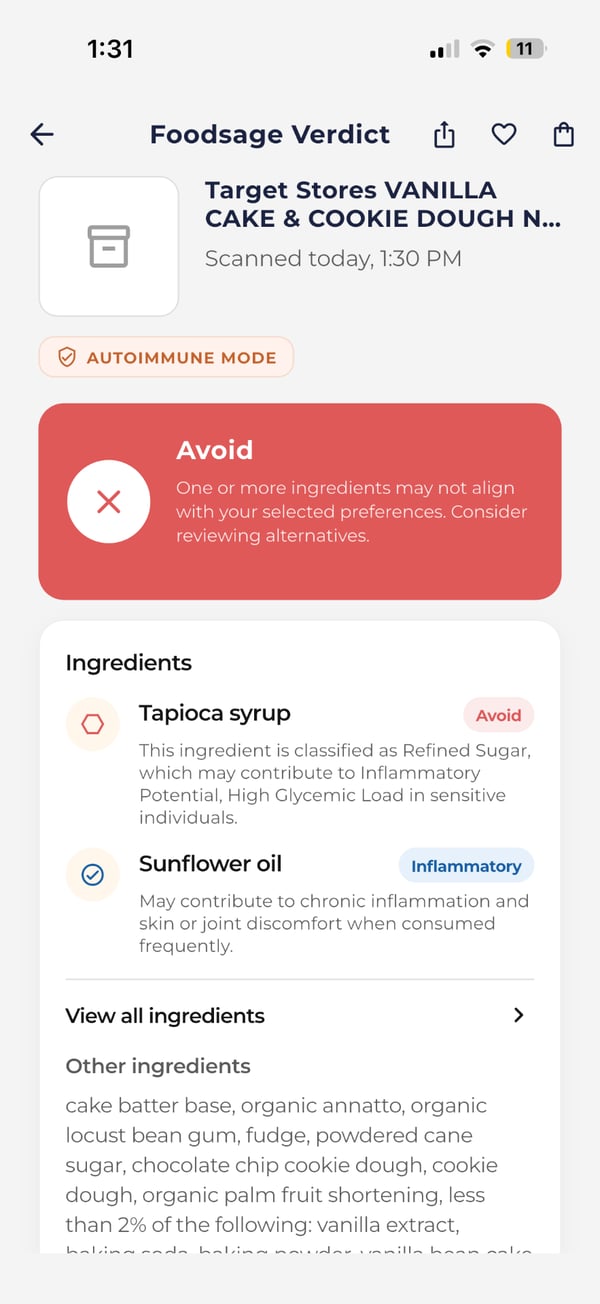
Foodsage checks a scanned product's ingredients against the profile you set up, and flags refined sugars and other ingredients that match what you want to avoid, with a short explanation for each.
Foodsage and the other MetricPoint apps are educational tools, not medical devices or medical advice. For decisions about your health, diabetes, IBD or a specific condition, talk to a qualified doctor or registered dietitian.
Continue reading
- GuideIs Carrageenan Bad for You? What the Gut Research Actually Shows
- GuideZero Sugar Snacks: What the Label Means and What Replaced the Sugar
- GuideDiabetes: Foods and Drinks to Limit, per CDC, NIDDK and ADA
- GuideHidden Sources of Gluten: Ingredients That Sneak onto Food Labels
- GuideFood additives to avoid: a guide to reading food labels
- GuideFoods to Avoid With Crohn's Disease: What the Research Says and What to Track
Bring inclusive wellness benefits to your team.
MetricPoint gives employers a modern, everyday wellness benefit employees actually use.
Request Demo