
Zero Sugar Snacks: What the Label Means and What Replaced the Sugar
Zero sugar snack ideas, what "zero sugar", "sugar free" and "no added sugar" mean under FDA rules, and how to spot sweeteners and sugar alcohols.
Quick answer: Under FDA rules, "zero sugar" or "sugar free" means less than 0.5 g of sugars per serving. The food can still be sweetened with stevia, sucralose, sugar alcohols or allulose, and it isn't automatically low in calories. The simplest zero-sugar snacks are whole foods such as nuts, cheese, eggs and vegetables. For packaged snacks, check the ingredient list.
A snack labeled "zero sugar" hasn't stopped tasting sweet. Something replaced the sugar. This guide explains what the claims on the front of the pack actually require, which sweeteners you're likely to find instead, where sugar still hides in "healthy" snacks, and how to choose. It is general information, not medical advice.
What "zero sugar", "sugar free" and "no added sugar" mean
Sugar claims on US labels are defined in 21 CFR 101.60. The regulation notes that consumers may reasonably read terms like "sugar free" as meaning low or reduced in calories, which is why those claims come with conditions.
| Claim | What it requires | What it doesn't tell you |
|---|---|---|
| "Sugar free", "zero sugar", "no sugar" | Less than 0.5 g of sugars per serving. Unless the food is low or reduced calorie, the claim must be accompanied by "not a reduced calorie food", "not a low calorie food" or "not for weight control". | Which sweetener replaced the sugar, or whether the snack is low in calories. |
| "No added sugar", "no sugar added" | No sugars or sugar-containing ingredients (such as jam or concentrated fruit juice) added during processing, and the food it replaces normally contains added sugar. If it isn't low calorie, the label must say so and point you to the Nutrition Facts panel. | How much natural sugar the food contains, for example from fruit or milk. |
| "Reduced sugar", "less sugar" | Less sugar than a reference version of the food. | Whether the amount is actually low. |
For a wider look at front-of-pack wording and additives, see our guide to food additives to avoid.
Reading the Nutrition Facts panel on a snack
The front of the pack is marketing. The Nutrition Facts panel is where the numbers are. The FDA explains that Added Sugars include sugars added during processing, such as sucrose, dextrose, syrups and honey, but not sugars that occur naturally in milk, fruit and vegetables. The Daily Value for added sugars is 50 grams a day, and as a rule of thumb, 5% DV or less is low and 20% DV or more is high.
Total Sugars includes both natural and added sugars, which is why a bag of plain dried fruit can show a lot of sugar but 0 g added. Some zero-sugar snacks may also list sugar alcohols separately on the panel, but the ingredient list is the most reliable way to see what was used.
What replaces the sugar: sweeteners in zero sugar snacks
High-intensity sweeteners
According to the FDA, six high-intensity sweeteners are approved as food additives in the US: aspartame, acesulfame potassium, sucralose, neotame, advantame and saccharin. High-purity steviol glycosides (stevia), monk fruit extract and thaumatin are used under GRAS notices the FDA did not question, while whole-leaf and crude stevia extracts are not permitted. The FDA says sweeteners it has authorized are safe for the general population under the approved conditions of use.
Two caveats. The FDA says people with phenylketonuria (PKU) should avoid or restrict aspartame, and products containing it must carry a statement that they contain phenylalanine. And the FDA disagrees with the International Agency for Research on Cancer's classification of aspartame as possibly carcinogenic, which is one reason headlines about sweeteners can seem contradictory.
Sugar alcohols (polyols)
Erythritol, xylitol, sorbitol, maltitol and mannitol are sugar alcohols, which the FDA permits in food. Polyols are a type of FODMAP and can cause gas, bloating or diarrhea in some people, especially those with IBS. Our guides to foods to avoid with IBS and IBS flare-up foods explain why, and our breakdown of Trident sugar-free gum ingredients shows a real label.
Erythritol has drawn attention since a 2023 study in Nature Medicine linked higher blood erythritol levels to major cardiovascular events in people undergoing heart-risk assessment, and found that erythritol increased platelet reactivity in lab tests. The authors called for studies of its long-term safety. The FDA says the observational studies it reviewed did not establish a causal link and that it will continue to monitor the evidence.
Allulose
Allulose is a rare sugar that the body doesn't use like ordinary sugar. In 2020 guidance, the FDA said it would allow allulose to be left out of the Total Sugars and Added Sugars lines and counted at 0.4 calories per gram, pending rulemaking. That is how a snack sweetened with allulose can show 0 g sugar.
What the WHO says
In 2023 the World Health Organization recommended against using non-sugar sweeteners to control body weight, saying they do not confer any long-term benefit in reducing body fat. It rated the recommendation conditional, said it does not apply to people with pre-existing diabetes, and excluded low-calorie sugars and sugar alcohols. The FDA and the WHO are answering different questions: the FDA asks whether a sweetener is safe to eat, and the WHO asks whether swapping to sweeteners helps with weight. Neither tells you a zero-sugar snack is a health food.
Hidden sugars in "healthy" snacks
Snacks that look wholesome are where added sugar is easiest to miss. Granola and protein bars often use syrups or fruit juice concentrates. Flavored yogurts, sweetened dried fruit and trail mixes with candy pieces add up quickly. Watch for names such as high-fructose corn syrup, malt extract and maltodextrin. Our diabetes foods to avoid guide lists more of the names sugar goes by.
Zero sugar snack ideas (whole foods first)
The easiest snacks with no added sugar don't need a label at all. Fruit and plain dairy contain natural sugars, so they aren't strictly zero sugar, but they have no added sugar.
- A handful of almonds, walnuts, pistachios or pumpkin seeds.
- Cheese with cucumber or celery.
- Hard-boiled eggs.
- Carrot, pepper and cucumber sticks with hummus or guacamole.
- Plain Greek yogurt with fresh berries: natural sugar, no added sugar.
- Olives.
- Plain air-popped popcorn with a little salt or olive oil.
- Roasted chickpeas, checking the seasoning on packaged versions.
- Seaweed snacks, checking the ingredient list for sugar.
- Celery with plain nut butter (no added sugar).
- Leftover roast chicken or a slice of turkey.
- An apple or pear with a few nuts.
How to choose a packaged zero sugar snack

- Read the claim, and remember what it does and doesn't promise.
- Check Added Sugars on the Nutrition Facts panel. 5% DV or less is low.
- Read the ingredient list to see which sweetener and which sugar alcohols were used.
- Check the serving size, because the 0.5 g threshold is per serving.
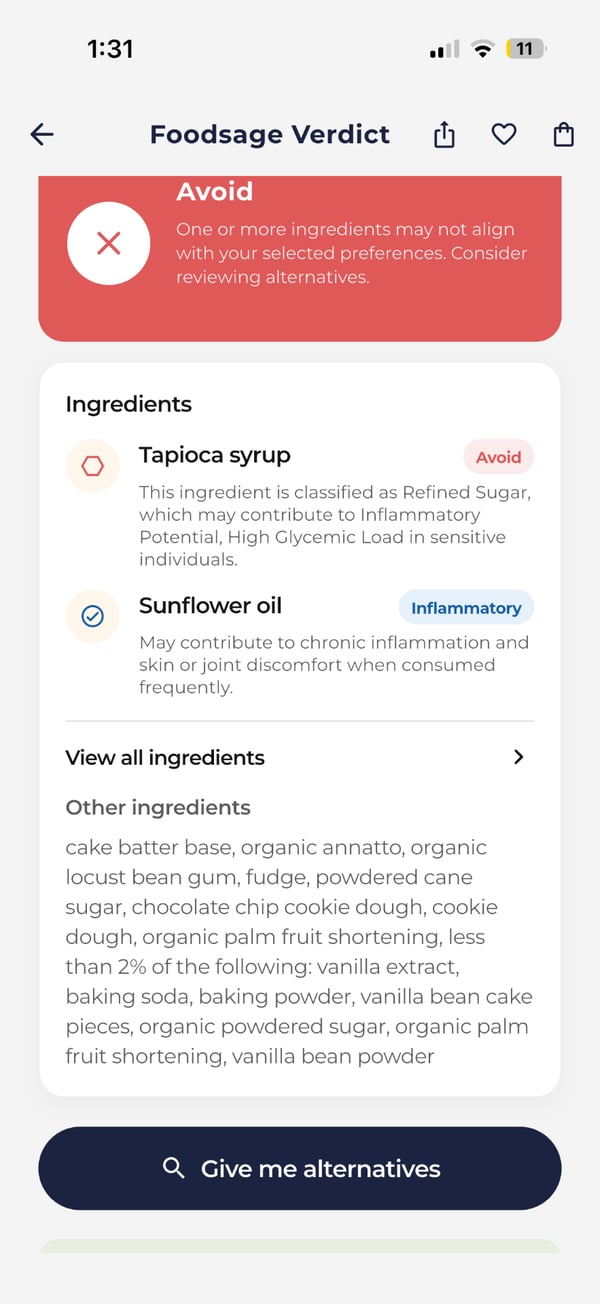
Foodsage can take care of steps 3 and 4 for you. Scan a product and it flags refined sugars and other ingredients against the profile you set up, then can suggest alternatives.
Who may want to check sweeteners more closely
- People with IBS or on a low FODMAP diet, because of polyols. See our best low FODMAP apps.
- People managing blood sugar. See our diabetes foods to avoid guide.
- People with phenylketonuria, who the FDA says should avoid or restrict aspartame.
- Anyone following an autoimmune elimination diet, which often excludes artificial sweeteners. Sucralose, for example, has its own ingredient page.
If you're cutting back on sugar for weight reasons, our belly fat guide covers what the research says about added sugars more broadly.
Foodsage and the other MetricPoint apps are educational tools, not medical devices or medical advice. If you have a condition and are unsure about sweeteners, talk to a qualified doctor or registered dietitian.
Continue reading
- GuideFood additives to avoid: a guide to reading food labels
- GuideDiabetes: Foods and Drinks to Limit, per CDC, NIDDK and ADA
- GuideTrident Watermelon Twist Gum Ingredients: Is It Gelatin-Free?
- GuideFoods to Avoid With IBS: How to Spot Common Triggers on Food Labels
- GuideIBS Flare-Up: What to Eat, What to Skip and What to Do First
- Pillar guideHow to Reduce Belly Fat: What Works, What Doesn't and Where Inflammation Fits
Bring inclusive wellness benefits to your team.
MetricPoint gives employers a modern, everyday wellness benefit employees actually use.
Request Demo