
Is Carrageenan Bad for You? What the Gut Research Actually Shows
Is carrageenan bad for your gut? What food-grade carrageenan is, how it differs from poligeenan, what EFSA and the FDA say, and what human studies show.
Quick answer: Food-grade carrageenan is a seaweed thickener permitted in the US and EU. EFSA's 2018 review found no concerns for cancer or genotoxicity, but called its intake limit temporary because of data gaps. Some lab and animal studies, and one 12-person ulcerative colitis trial, suggest gut effects. The human evidence is limited, so people with IBD may choose to avoid it.
Carrageenan is one of the most argued-over food additives, and a lot of the argument comes from mixing up two different substances. This guide separates what regulators and researchers actually know from what is still being studied. It is general information, not medical advice.
What is carrageenan?
Under US rules, 21 CFR 172.620, carrageenan is a refined hydrocolloid extracted from certain red seaweeds, including Chondrus crispus and Eucheuma and Gigartina species. Chemically it is a sulfated polysaccharide built mostly from galactose units. It may be used "in the amount necessary for an emulsifier, stabilizer, or thickener in foods", and labels must name it as carrageenan. In the EU it is E407, and a less refined version called processed Eucheuma seaweed is E407a.
Manufacturers use it to stop plant milks from separating, to give deli meats a firmer texture and to set desserts. Our guide to how to avoid emulsifiers in food covers the wider family of thickeners and emulsifiers.
Carrageenan vs poligeenan: the confusion behind the debate
Poligeenan is a degraded, low-molecular-weight form. In its 2018 re-evaluation, the European Food Safety Authority (EFSA) says poligeenan "has not been authorised as a food additive and is not used in any food applications".
The distinction matters because some studies used degraded carrageenan. The authors of a 2021 rat study argue that low-molecular-weight forms are "well-characterized toxic substances" that have sometimes been tested in place of food-grade carrageenan. Researchers on the other side of the debate cite earlier work reporting inflammation from both low- and high-molecular-weight carrageenan. That is part of why the question remains contested. When you read that carrageenan causes ulcers or cancer, check whether the study tested the food additive or poligeenan.
What regulators say
EFSA's 2018 re-evaluation concluded that:
- Carrageenan is not absorbed intact.
- No adverse effects were detected in chronic toxicity studies in rats at up to 7,500 mg per kg of body weight a day, the highest dose tested.
- There was no concern about carcinogenicity or genotoxicity.
- It noted uncertainties about the chemistry, exposure estimates and biological and toxicological data.
- Because of those gaps, it made the group acceptable daily intake (ADI) of 75 mg per kg of body weight a day temporary, and asked for the data to be improved within five years.
In the US, carrageenan is permitted as a food additive under 21 CFR 172.620. That regulation sets out what carrageenan is and how it may be used. It is a specification, not a new safety review.
What the research on gut health shows
Cell and animal studies
Much of the concern comes from lab and animal work. In the 2021 rat study, published in the International Journal of Molecular Sciences, rats given processed Eucheuma seaweed (E407a) in their drinking water for two weeks had higher levels of the inflammation marker CRP and more immune cells in the gut lining. The study had 8 rats per group, measured biomarkers rather than illness, and used about 140 mg per kg a day, roughly 3.5 times the authors' own upper estimate of human intake. The authors also caution that cell-culture findings "should not be overinterpreted".
Human trials
The best-known human study is a 2017 randomized, double-blind, placebo-controlled trial in adults with ulcerative colitis in remission. Of the 12 people analyzed, 3 of 5 who took carrageenan capsules relapsed, compared with none of 7 who took placebo. The authors concluded that carrageenan contributed to earlier relapse, but they also wrote that, because of the small sample, the findings "may be attributable to a type I error", which means a false positive. The trial stopped once it reached statistical significance.
What's missing
A 2023 scoping review in Critical Reviews in Toxicology mapped 196 publications on carrageenan and the gut. It found only five human research publications, against 69 in animals and 33 in cell experiments. It called for future studies to focus on native, food-grade carrageenan and for randomized trials "of sufficient power and with realistic dietary exposure levels". In short, the evidence is not settled in either direction.
Should you avoid carrageenan?
- Most people: regulators have not found harm at typical intakes, and EFSA has flagged data gaps. Avoiding carrageenan is a reasonable personal choice, not a necessity.
- People with IBD, including ulcerative colitis and Crohn's disease: some choose to avoid it because of the early evidence. Talk to your gastroenterologist or dietitian. Our guides to foods to avoid with ulcerative colitis and foods to avoid with Crohn's disease, and our IBD ingredient guide, cover the wider picture.
- Anyone who notices symptoms after products containing carrageenan: try a period without it and keep notes, then discuss what you find with your doctor.
Where carrageenan shows up and how to spot it

- Plant milks, especially barista-style blends. Our matcha latte guide shows how these blends differ from short-ingredient milks.
- Dairy desserts, ice cream, puddings and some cream products.
- Deli meats and some poultry products. Store rotisserie chicken seasonings can include it, as our page on rotisserie chicken and sodium notes.
- Vegan gelatin substitutes, such as some plant-based desserts and marshmallows.
On the label, look for carrageenan, E407, E407a or processed Eucheuma seaweed. If you want to avoid it, the easiest swaps are short-ingredient plant milks, plain dairy, and whole cuts of meat instead of processed deli slices. Our guide to food additives to avoid covers other additives worth knowing.
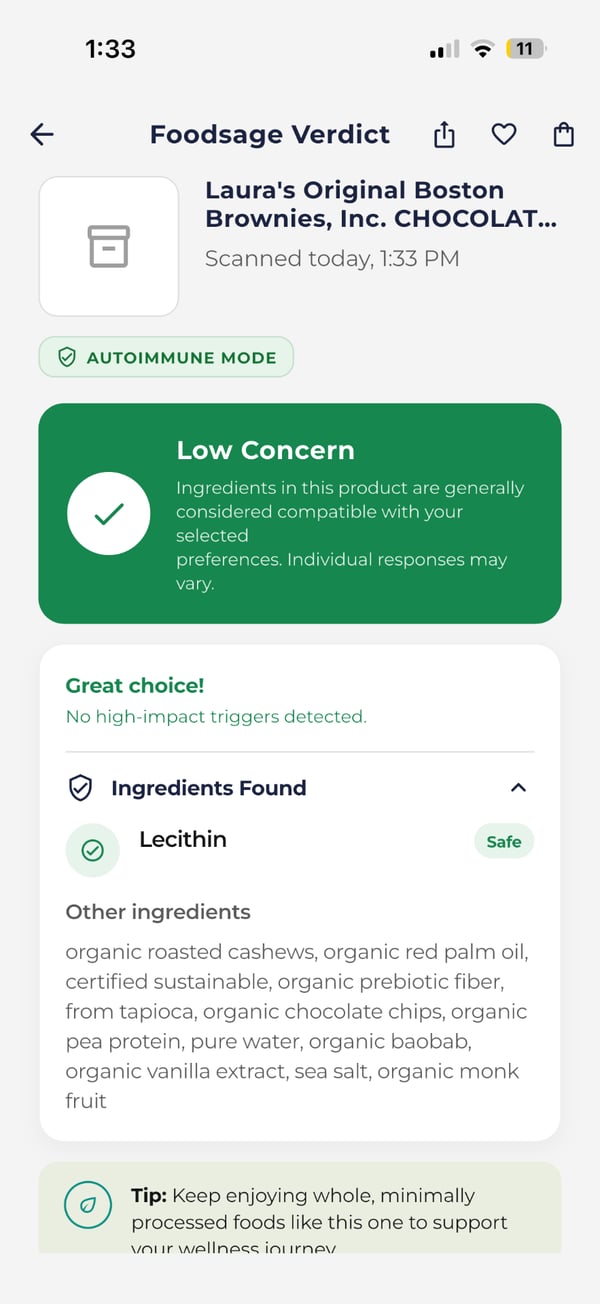
Foodsage checks a scanned product's ingredients against the profile you set up, so you can see at a glance what is in a product and whether anything matches your avoid list.
Foodsage and the other MetricPoint apps are educational tools, not medical devices or medical advice. For decisions about your health, IBD or a specific condition, talk to a qualified doctor or registered dietitian.
Continue reading
- GuideHow to Avoid Emulsifiers in Food
- GuideFood additives to avoid: a guide to reading food labels
- GuideFoods to Avoid With Ulcerative Colitis: What the Research Says and What to Track
- GuideFoods to Avoid With Crohn's Disease: What the Research Says and What to Track
- GuideGreen Tea Matcha Latte: Hidden Ingredients to Watch For and How to Make It Cleaner
Bring inclusive wellness benefits to your team.
MetricPoint gives employers a modern, everyday wellness benefit employees actually use.
Request Demo