
Is Canola Oil Inflammatory? What Human Studies Actually Show
What canola oil is, what trials found on inflammation markers, how it compares with olive oil, and what the hexane, heat and omega-6 claims rest on.
Quick answer: Human trials have not shown that canola oil raises inflammation markers. A review of 15 trials found that linoleic acid, the main omega-6 fat in seed oils, did not increase them either. In a few head-to-head trials, olive oil lowered some markers more than canola did. Heavily fried and ultra-processed foods are a separate question.
Canola oil is in a large share of packaged foods, and the claims about it run from heart-healthy to toxic. This guide separates what trials in people have measured from what is assumed. It is general information, not medical advice.
What Is Canola Oil?
Canola oil comes from the seeds of rapeseed varieties bred to be low in erucic acid. The FDA's regulation, 21 CFR 184.1555, describes low erucic acid rapeseed oil, also known as canola oil, as the fully refined, bleached and deodorized oil from certain varieties of Brassica napus or Brassica campestris, with erucic acid at no more than 2 percent of its fatty acids. The regulation permits it as an edible fat and oil in food, except in infant formula.
On UK and European labels the same oil is usually called rapeseed oil. It is one of the oils grouped as seed oils, which our guide to what seed oils are explains.
What Is in Canola Oil?
Most of the fat in canola oil is monounsaturated, the same type that dominates olive oil. The figures below come from the USDA's FoodData Central entry for canola oil.
| Type of fat | Grams per 100 g of canola oil |
|---|---|
| Monounsaturated fat | 63.3 |
| Polyunsaturated fat, total | 28.1 |
| Linoleic acid (omega-6) | 18.6 |
| Alpha-linolenic acid (omega-3) | 9.1 |
| Saturated fat | 7.4 |
| Trans fat | 0.4 |
That works out to about two parts omega-6 to one part omega-3. Canola oil has less omega-6 than soybean, corn or sunflower oil, and it is one of the few common cooking oils with a meaningful amount of omega-3.
Where the Claim That Canola Oil Is Inflammatory Comes From
- The omega-6 theory. The body can turn linoleic acid into arachidonic acid, which is a building block for compounds involved in inflammation. The concern is that eating a lot of omega-6 fat pushes the body toward chronic inflammation. This is a hypothesis about a mechanism, and the next section covers how it has held up in trials.
- Processing. Refined canola oil is extracted with a solvent and deodorized at high heat, which worries people who prefer less-processed foods.
- The company it keeps. Canola oil is common in fried and ultra-processed foods, so a diet high in canola oil is often a diet high in those foods. That makes it hard to tell the oil's effect from the diet's.
What Human Studies Show
Omega-6 fat and inflammation markers
A 2012 systematic review in the Journal of the Academy of Nutrition and Dietetics looked at 15 randomized trials in healthy people. None reported a significant change in markers such as C-reactive protein, fibrinogen, cytokines or tumor necrosis factor when people ate more linoleic acid. The authors concluded that there was virtually no evidence from such trials that adding it to the diet raises inflammatory markers.
A 2017 meta-analysis pooled 30 randomized trials with 1,377 participants and also found no significant effect on C-reactive protein, interleukin-6 or tumor necrosis factor. It came with a caveat. In the trials where linoleic acid intake rose the most, C-reactive protein may have gone up, so the authors did not rule out an effect at high intakes.
Canola oil itself
The best-established effect of canola oil is on cholesterol. A 2020 meta-analysis of 42 controlled trials found that it lowered total and LDL cholesterol compared with other edible oils. Its published summary reports no significant result for inflammation in either direction.
A 2013 review in Nutrition Reviews found 13 studies on canola oil and inflammation. In the examples it describes, markers such as C-reactive protein did not differ between canola-based diets and comparison diets. That review was funded by the Canola Council of Canada and the U.S. Canola Association, so read it as an industry-supported summary.
Canola oil against olive oil
- Heart patients, 6 weeks. In a 2020 trial, 48 people with cardiovascular risk factors took 25 mL a day of refined olive oil or canola oil. Interleukin-6 fell more in the olive oil group. A different marker, Lp-PLA2 mass, fell in the canola group. The authors advised caution in reading the results.
- Ulcerative colitis, 20 days per oil. In a 2020 crossover trial that 32 patients completed, extra virgin olive oil lowered two inflammation markers and eased bloating, constipation and urgency. The trial shows a benefit for extra virgin olive oil. It does not show that canola oil made patients worse.
- Obese men, 4 weeks. In a 2015 trial of 50 g a day, canola oil lowered cholesterol and a resting inflammatory gene signal in fat tissue compared with olive oil. But four hours after a large test meal, inflammatory gene activity in fat tissue rose more with canola.
What this adds up to
Trials in people do not show that canola oil raises inflammation markers. Where olive oil was tested directly against it, olive oil did better on some markers. These trials are small, they last weeks and not years, and they measure blood markers, not disease. They cannot prove long-term benefit or harm either way.
Hexane, Trans Fat and Heat
Harvard's Nutrition Source addresses the processing concerns in its expert review of canola oil.
- Hexane. Most canola oil is extracted with hexane. Harvard says the residue left in refined oils is a trace amount and that there appears to be very little reason for concern about it.
- Trans fat. Deodorizing any vegetable oil at high heat turns a little unsaturated fat into trans isomers. Harvard reports 1.9 to 3.6 percent in commercial canola oil samples, against 0.5 percent for olive oil and more than 40 percent for partially hydrogenated soybean oil. It describes canola's level as no different from other vegetable oils.
- Repeated frying. Harvard notes that seven days of commercial deep frying raised the trans fat in canola oil from 2.4 to 3.3 percent. It says oxidation products from prolonged frying are potentially a greater concern, though less so for canola than for oils higher in polyunsaturated fat, such as corn, soybean and sunflower oil.
- Cold-pressed canola. It exists, but Harvard describes it as expensive and hard to find.
Canola Oil or Olive Oil?
If inflammation is your main concern, extra virgin olive oil has somewhat better trial evidence. Canola oil has a neutral flavor, is low in saturated fat, costs less and lowers LDL cholesterol. The American Heart Association includes both in its list of healthy cooking oils. If you would rather not cook with seed oils at all, our guide to non-seed oils covers what to use for each job.
Who May Want to Check for Canola Oil
- People following an anti-inflammatory or autoimmune-style eating pattern who have decided to limit seed oils. That is a personal choice, and the ingredient list is where to check. See our anti-inflammatory diet guide and the list of seed oils people avoid.
- People with ulcerative colitis. One small trial favored extra virgin olive oil. Talk to your gastroenterologist or dietitian before changing your diet, and see our guide to foods to avoid with ulcerative colitis.
- Everyone else. Canola oil in home cooking is not a known inflammation risk. How much fried and ultra-processed food you eat is likely to matter more than which liquid oil is in the pan.
How to Spot Canola Oil on a Label

Look for canola oil, rapeseed oil or low erucic acid rapeseed oil in the ingredient list. Generic vegetable oil with no plant named is often soybean or canola oil. Common places to find it are salad dressings, mayonnaise, chips, crackers, baked goods and barista-style oat and almond milks, which our matcha latte ingredient guide covers.
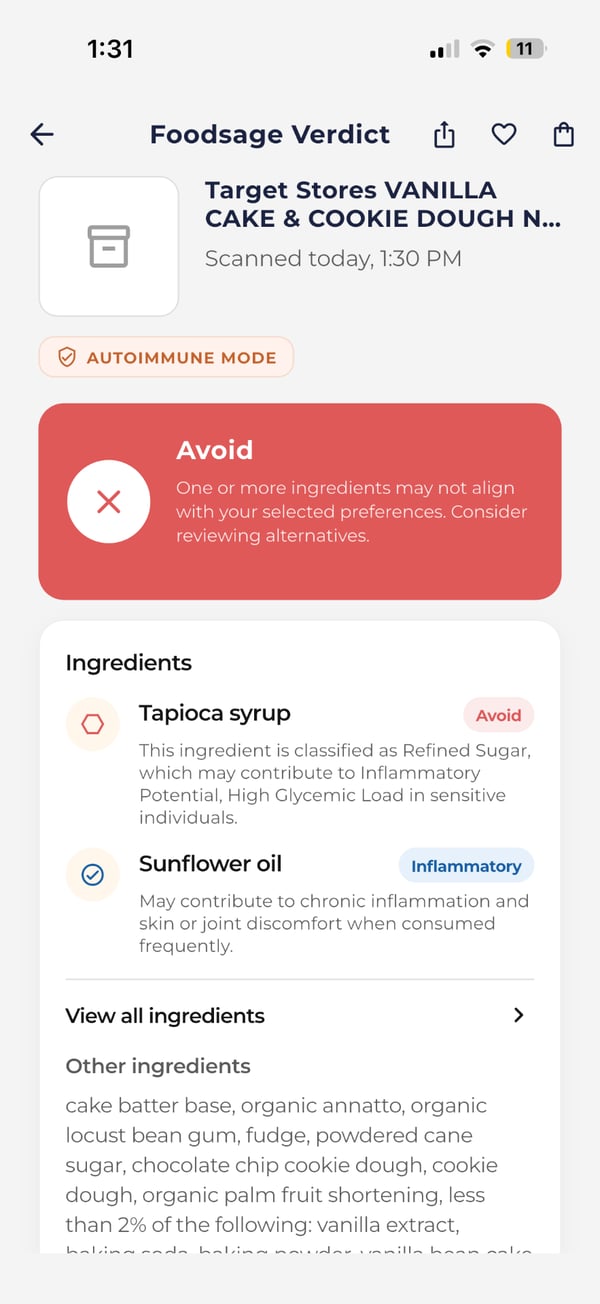
Foodsage can scan a product and flag industrial seed oils as one of the categories you choose to avoid. The flag reflects the profile and preferences you set up. It is a way to act on a choice you have made, and the research above is what to weigh when making it.
If you have heart disease, inflammatory bowel disease or another condition that affects what you eat, check with your doctor or dietitian before changing the fats you use. For other ingredient questions, see our guides to maltodextrin and carrageenan.
Continue reading
- GuideWhat Are Seed Oils? Non-Seed Oil Alternatives and Seed-Oil-Free Foods
- GuideNon-Seed Oils: What to Cook With Instead, and What Works for Frying
- GuideThe Complete List of Seed Oils to Avoid (and What to Use Instead)
- Pillar guideAnti-Inflammatory Diet: What to Eat, What to Avoid and What the Evidence Shows
- GuideIs Maltodextrin Bad for You? Blood Sugar, Gut Research and Labels
- GuideIs Carrageenan Bad for You? What the Gut Research Actually Shows
Bring inclusive wellness benefits to your team.
MetricPoint gives employers a modern, everyday wellness benefit employees actually use.
Request Demo