
West African Leafy Greens: Ugwu, Jute Leaves, Uziza and Water Leaf Explained
Ugwu, jute leaves (ewedu), uziza and water leaf: what each is, how it is cooked, what the evidence says, and cautions for warfarin, kidney stones and allergies.
Quick answer: Ugwu (fluted pumpkin leaf), jute leaves (ewedu or molokhia), uziza (Piper guineense) and water leaf are traditional West African greens and flavorings used in soups and stews. They fit a vegetable-rich eating pattern, but claims that each one is anti-inflammatory rest on laboratory and animal studies, not human trials. Check with your doctor if you take warfarin or have a history of kidney stones.
Searches for anti-inflammatory foods return many traditional African greens, usually with big promises. This guide explains what each one is, how it is cooked, what research exists and what it does and does not show, and who should be careful. It is general information, not medical advice.
Ugwu (Fluted Pumpkin Leaf)
Ugwu, also written ugu, comes from the fluted pumpkin, Telfairia occidentalis, a tropical vine grown across West Africa and indigenous to southeastern Nigeria. According to the Wikipedia entry, the young shoots and leaves are the main ingredient of the Nigerian soup ofe egwusi and are used in stews, egg sauce and vegetable sauce, and the seeds can be boiled, ground for soup or fermented.
On research, the studies we found were not in people. A 2021 in vitro study found that polyphenol-rich leaf extracts, including ugwu, inhibited the enzymes alpha-amylase and pancreatic lipase in a test tube. A 2018 rat study found that low doses of leaf extract appeared to improve testicular structure while the highest doses reduced testosterone, which is a reminder that extracts are not the same as eating leaves in a stew. Neither tells you what ugwu does in a person.
Jute Leaves (Ewedu, Molokhia)
Jute leaves come from Corchorus olitorius, which has many names: ewedu in Nigeria, molokhia or mulukhiyah in Egypt and the Levant, and saluyot in the Philippines. The Wikipedia entry says the leaves are boiled into a sticky, mucilaginous sauce in Nigeria and Zambia, form the base of mulukhiyah in Egypt, Sudan and Palestine, and go into soups and stews in the Philippines and Vietnam. It describes the leaves as rich in potassium, iron and vitamins A, B6 and C, and notes that the health uses are folk-reported and not verified.
A search of the research literature for this plant turned up a 2003 nutritional composition paper on molokhia and plant-science and laboratory studies, but no human trials of its effect on inflammation.
Uziza (Piper guineense)
Uziza is the Igbo name for Piper guineense, also called Ashanti pepper, Benin pepper or Guinea cubeb. As the Wikipedia entry describes, the leaves flavor stews in Nigeria, and the dried fruit is a pungent spice that is used sparingly, often ground in a mortar and added to soups or boiled rice. It is hard to find outside West and Central Africa. We found no human research on it as a health food, and it is used as a seasoning, not in large amounts.
Water Leaf
Water leaf is Talinum fruticosum, also called Ceylon spinach, Surinam purslane and waterleaf, and it is known by many local names in Nigeria and Ghana. It grows across West Africa and much of the tropics. The Wikipedia entry says the leaves are rich in vitamins and minerals, and that they are high in oxalic acid, so people with kidney disorders, gout or rheumatoid arthritis should limit them, though those statements are tagged as needing citations.
The studies we found on this plant (the related species Talinum triangulare) were in mice and in test tubes, such as work on polysaccharides and blood glucose in diabetic mice. They do not show an effect in people. On oxalate, NIDDK advises people who have had calcium oxalate kidney stones to limit high-oxalate foods and names spinach among them, so ask your doctor how an oxalate-rich green fits your situation.
What the Evidence Does and Does Not Show
| Green | Traditional use | Human evidence on inflammation | What we found |
|---|---|---|---|
| Ugwu | Soups (ofe egwusi), stews, sauces | None found | An in vitro enzyme study and rat studies |
| Jute leaves | Sticky sauces, mulukhiyah, soups | None found | Composition and plant studies; folk uses not verified |
| Uziza | Leaf and spice for stews and rice | None found | Culinary descriptions only |
| Water leaf | Leaf vegetable in cooked dishes | None found | Mouse and test-tube studies |
The reasonable way to use these is as part of the vegetable-rich pattern Harvard's Nutrition Source describes: fruits and vegetables in a variety of colors, with olive oil, legumes, whole grains and fish. They are traditional, flavorful and nutritious, and they are not treatments for any condition.
How to Cook Them Simply
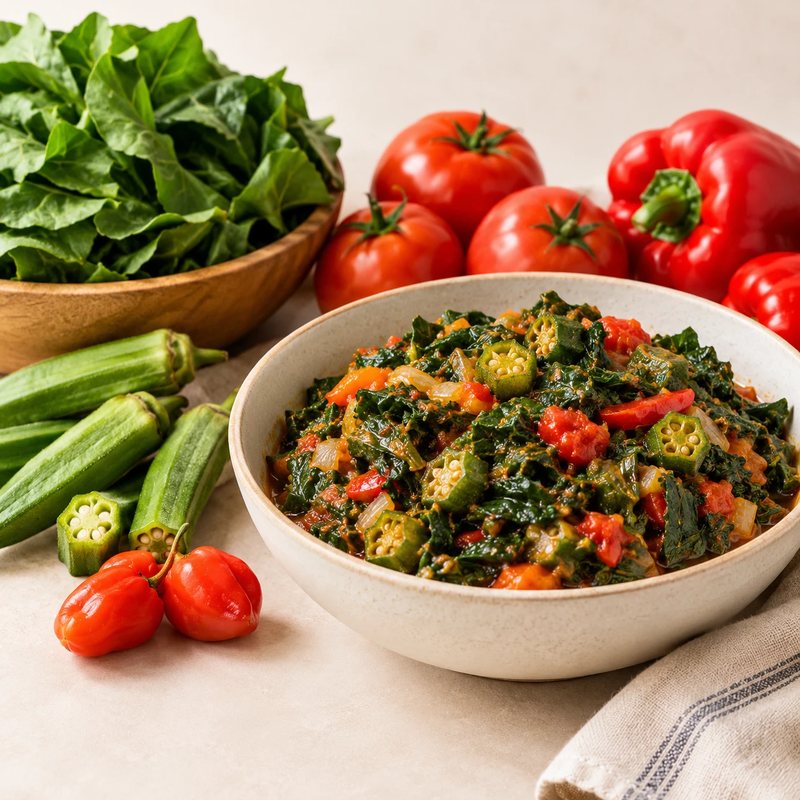
- Wash well and cut ugwu and water leaf, then wilt them in a pot with onion, ginger, garlic and a little oil, as in our leafy greens with okra recipe in the global flavors guide.
- Cook jute leaves briefly in water or broth until they turn glossy and slippery. Many people eat the sauce with a starchy side.
- Use uziza leaves or ground uziza seed sparingly as a seasoning in soups and boiled rice.
- If you cannot find them, kale, collards, spinach and other leafy greens are substitutes in most recipes, with different flavor and texture.
Cautions
- Warfarin: MedlinePlus says some foods that contain vitamin K can affect how warfarin works and advises eating consistent amounts week to week. It tells people not to eat large amounts of leafy green vegetables and to talk to their doctor before changing their diet.
- Kidney stones: if you have had calcium oxalate stones, NIDDK says you may want to avoid high-oxalate foods, and some sources report water leaf is high in oxalic acid. Ask your doctor.
- Soups often contain allergens: egusi (melon seed), groundnut, fish, shellfish and dried crayfish are common thickeners and seasonings.
- Extracts and supplements are not the same as food. The rat study on ugwu shows that high doses of an extract can have effects that eating the leaf in a meal would not.
Checking Ingredients With Foodsage
These greens are fresh foods, but the stocks, spice blends, seasoning cubes and ready-made sauces used with them are packaged. Foodsage lets you choose conditions, sensitivities and avoid categories, scan a barcode or ingredient list, and see which ingredients matched. It creates personalized weekly meal plans, including AIP-diet recipes, and its menus draw on cuisines from around the world. It does not diagnose or treat any condition, and no app can guarantee a food is safe for you, so read labels.
Continue reading
- Pillar guideAnti-Inflammatory Recipes From Around the World: A Global Flavors Guide
- Pillar guideAnti-Inflammatory Diet: What to Eat, What to Avoid and What the Evidence Shows
- GuideHausa Koko: What It Is, How It Is Made and a Simple Millet Porridge Recipe
- GuideFonio: What It Is, Whether It Is Gluten-Free and How to Cook It
- GuideHibiscus Tea (Zobo, Sorrel): Benefits, Blood Pressure Evidence and Who Should Avoid It
Bring inclusive wellness benefits to your team.
MetricPoint gives employers a modern, everyday wellness benefit employees actually use.
Request Demo