
Foodsage vs. Yuka: Which Food Scanner Fits Food Sensitivities?
Yuka grades food for everyone. Foodsage checks ingredients against your conditions and sensitivities. How the two scanners differ, and who each fits.
If you've ever scanned a granola bar in the grocery aisle, there's a good chance you used Yuka. It's one of the best-known food scanner apps: point your phone at a barcode and you get a score out of 100, a breakdown of the additives, and healthier suggestions.
For a lot of people that's exactly enough. But if you live with an autoimmune or chronic condition, or a list of food sensitivities, a score built for the general population can leave your real question unanswered: does this product contain something that I, specifically, react to? That's the question MetricPoint's Foodsage is built around.
This guide explains how each app works, where each is strongest, and who each one fits. It's general information, not medical advice. Talk to your doctor or a registered dietitian about your own triggers.
At a Glance: Yuka vs. Foodsage
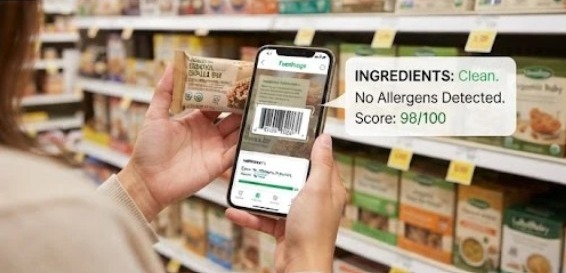
- Primary purpose — Yuka: a general health score for food and for hygiene and cosmetic products. Foodsage: an ingredient check for packaged food against the conditions, sensitivities and clean-eating goals you choose.
- What a scan gives you — Yuka: a score out of 100, with the nutrition and additive details behind it. Foodsage: a verdict, such as Avoid or Low Concern, with the specific ingredients that matched your selections and why.
- Personalization — Yuka: the score is the same for everyone; Premium adds alerts for gluten, lactose, sulfites, soy, palm oil and vegetarian, vegan or pork-free diets. Foodsage: you pick conditions such as celiac disease, IBD, Hashimoto's, Graves' disease, lupus, multiple sclerosis, rheumatoid arthritis, PCOS or diabetes, plus custom sensitivities like dairy, gluten, FODMAP, nightshade, nuts, shellfish and soy.
- Cosmetics — Yuka: yes. Foodsage: food only.
- Cost — Yuka: free scanning, with an optional Premium membership at $10, $15 or $20 a year (you choose the tier). Foodsage: free to download, with in-app purchases including a Premium subscription.
How Yuka's Score Works
Yuka publishes its method. According to Yuka's help center, a food product's score is built from three parts:
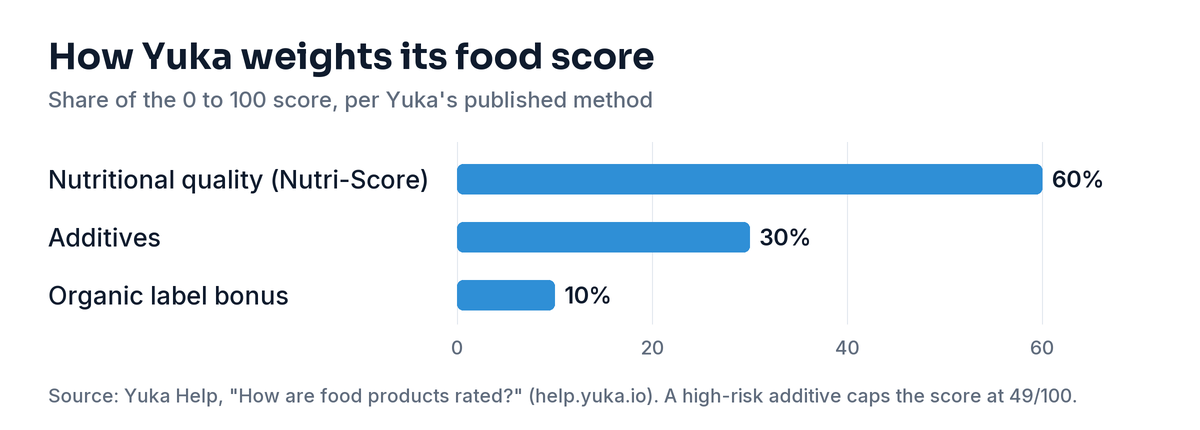
- Nutritional quality (60%) — based on Nutri-Score, which weighs sugar, sodium, saturated fat, calories, protein, fiber, and fruit and vegetable content.
- Additives (30%) — each additive is rated risk-free, limited risk, moderate risk or high risk. If a high-risk additive is present, the product's score can't go above 49 out of 100.
- Organic (10%) — a bonus for products with an official national or international organic label.
For additives, Yuka says it draws on assessments from bodies including the FDA, EFSA, the WHO, JECFA and IARC, along with independent studies ranked by level of evidence (Yuka's sources). Yuka also says it receives no funding from brands or manufacturers and relies on Premium memberships instead. As a fast, consistent signal for whether a packaged food is a reasonable everyday choice for most people, that's genuinely useful.
Where a general score falls short for food sensitivities
The limits come from the same design choice: one score for everyone.
- It can't know your triggers — A product can score well on nutrition and additives and still contain wheat, dairy, soy or a nightshade you react to. The score isn't wrong; it's simply answering a different question.
- Personal alerts are limited — Yuka's food preference alerts are a Premium feature and cover a short list (gluten, lactose, sulfites, soy, palm oil and a few diets), not conditions like IBD, lupus or Hashimoto's.
- Traces aren't checked — Yuka's help center says it does not take “traces” of unwanted ingredients into account, and it tells people with allergies, intolerances or dietary restrictions to always check the product label.
- Good and bad labels can backfire — Registered dietitian Abby Langer argues that labeling foods good or bad can create guilt around eating, and that flagging additives without context about the amounts eaten encourages fear of food rather than understanding.
How Foodsage Approaches the Same Product

Foodsage starts from you rather than from the product. During setup you choose the conditions, sensitivities and clean-eating goals that apply to you, and every scan is checked against them.
- Scan a barcode or the label — Use Barcode mode, photograph the ingredient list with Label mode, or search for a product.
- Ingredient-level verdicts — Each scan returns a verdict, such as Avoid or Low Concern, along with the specific ingredients that matched your selections, so you can see why a product was flagged instead of trusting a single number.
- A clean-eating mode — If your goal is a cleaner, anti-inflammatory pattern, you can choose what to avoid, including artificial additives and preservatives, industrial seed oils, added sugars and sweeteners, refined and processed starches, and nitrates and nitrites.
- Alternatives on the spot — When a product doesn't fit, Foodsage can suggest lower-concern options.
Foodsage doesn't diagnose or treat any condition. It's a faster way to do the label reading you'd otherwise do by hand.
Example: the same snack, two different questions
Take a hypothetical granola bar made with oats, tapioca syrup and sunflower oil. A general score looks at its nutrition and additives and grades it for an average shopper. Someone using Foodsage in Autoimmune Mode with refined sugars and seed oils on their avoid list would instead see those two ingredients flagged, with an explanation of each.
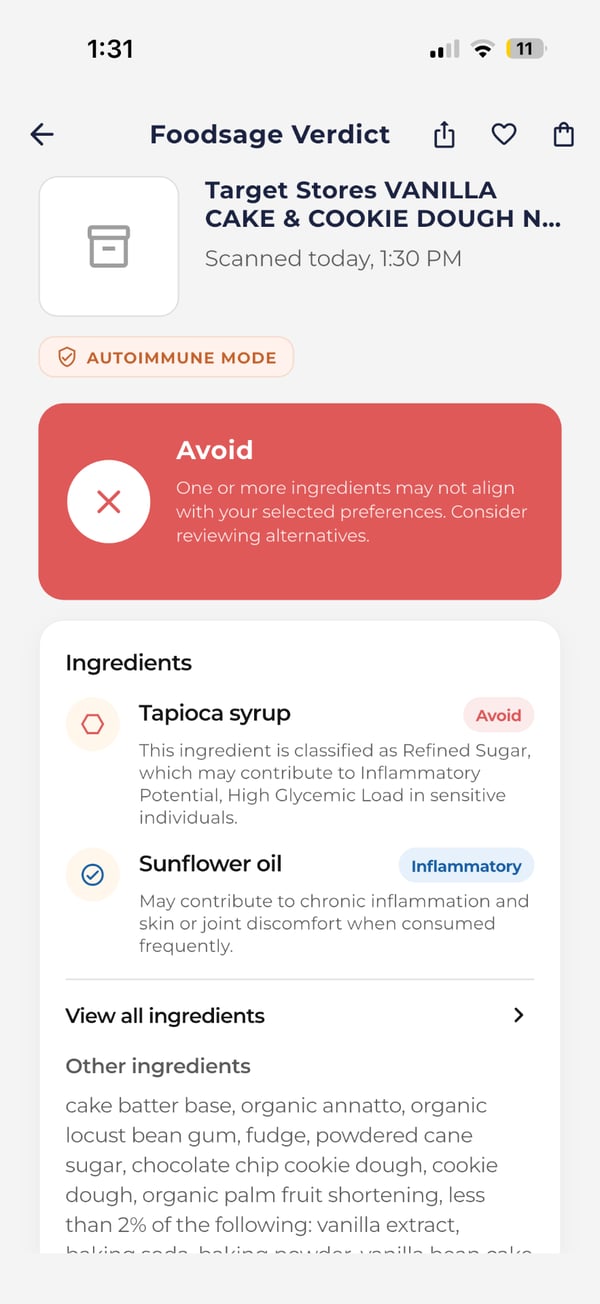
Neither answer is wrong. They're answers to two different questions: “is this a reasonable food in general?” and “does this fit me?”
Which One Should You Use?
- Choose Yuka if you want a quick general health grade, also want to scan cosmetics and hygiene products, and don't have a specific condition or set of triggers to manage.
- Choose Foodsage if you're managing an autoimmune or chronic condition, or several food sensitivities, and want to know which ingredients in a product matter for you and why. If you're working through a protocol such as the AIP diet, checking packaged foods against your avoid list is where a personal scan helps most.
- Use both if you like Yuka's general score but also need a trigger check. Plenty of people combine tools; we make the same case for pairing Foodsage with the Monash FODMAP app.
A Note for Celiac Disease and Serious Allergies
No scanner replaces reading the label yourself, including precautionary statements like “may contain wheat,” or the plan you've agreed with your clinician. Yuka says this plainly in its own help center, and the same applies to Foodsage. If you have celiac disease, our guides to gluten as an ingredient and whether common foods are gluten-free cover the ingredient-level details.
Try Foodsage on Your Next Grocery Run
If a single score has never quite answered your question, try a scanner built around your own triggers. Learn more about Foodsage and download it for iOS or Android.
Continue reading
Bring inclusive wellness benefits to your team.
MetricPoint gives employers a modern, everyday wellness benefit employees actually use.
Request Demo