
PCOS Friendly Foods: What to Eat, What to Limit and the Evidence
PCOS friendly foods to eat and limit, why lower-GI eating may help insulin resistance, and why the 2023 guideline recommends no single PCOS diet.
Quick answer: There is no single PCOS diet, and the 2023 international guideline advises against unduly restrictive diets. PCOS friendly eating centres on fiber-rich vegetables, legumes, whole grains, fruit, fish, nuts and olive oil. Limiting added sugars, sugary drinks and refined starches may help insulin resistance. Research on low-GI and DASH-style eating is promising but low in certainty.
Polycystic ovary syndrome (PCOS) has no cure, but its symptoms can be managed, according to the US Office on Women's Health. Many women with PCOS have insulin resistance, which is why food comes up so often after a diagnosis. This guide covers what to eat, what to limit and how strong the evidence is. It is general information, not medical advice.
Is there a PCOS diet? What the 2023 guideline says
The 2023 International Evidence-based Guideline for PCOS, developed with professional societies and women with PCOS across six continents, makes healthy lifestyle a core part of care. On food, its recommendations say there is no evidence that any one diet composition is better than another for PCOS, that healthy eating in line with general population guidelines has health benefits, and that advice should be tailored to each person's preferences and goals.
Two more points matter. The guideline warns against unduly restrictive and nutritionally unbalanced diets. As GP Dr Sarah Wood summarized it for Healthed, "There is no perfect diet, but restriction diets are not recommended." It also says a healthy lifestyle has benefits even without weight loss, and asks health professionals to be aware of weight stigma. That is why this guide focuses on food quality, not on weight.
Why food matters in PCOS: insulin resistance and inflammation
Insulin resistance means the body needs more insulin to keep blood sugar steady. The Office on Women's Health notes that many women with PCOS have it, especially those with overweight or obesity. A 2025 systematic review in Nutrients describes lifestyle changes as first-line management and says a diet low in refined carbohydrates and high in fiber can help regulate blood sugar.
Inflammation is the other thread. The same review reports that anti-inflammatory diets improved insulin sensitivity and hormone measures in small trials, but these were early studies. For the general eating pattern, see our anti-inflammatory diet guide.
PCOS friendly foods to eat

Vegetables
Leafy greens, broccoli, cauliflower, Brussels sprouts, peppers, zucchini and carrots add fiber and volume to meals with little effect on blood sugar. Aim for vegetables at most meals.
Legumes and whole grains
Lentils, beans, chickpeas, oats, barley, brown rice and quinoa are the core of lower-glycemic eating. Their fiber slows digestion, so they raise blood sugar more gradually than white bread or pastries.
Fruit
Whole fruit such as berries, apples, pears and oranges brings fiber with its natural sugar. Juice loses most of that fiber, so whole fruit is the better choice.
Protein
Fish, poultry, eggs, tofu, tempeh and Greek yogurt help make meals more filling. Oily fish such as salmon and sardines also supply omega-3 fats.
Fats
Olive oil, nuts, seeds and avocado provide unsaturated fats. Use them in place of butter and fried foods where you can.
Dairy and fermented foods
Online advice on dairy and PCOS is contradictory. The guideline doesn't ask people with PCOS to cut dairy, gluten or other whole food groups, and it warns against unduly restrictive diets. If you have a separate condition that requires it, such as celiac disease or a milk allergy, follow the advice for that condition.
Foods to limit with PCOS
Many PCOS food lists say to avoid certain foods "at all costs". The evidence doesn't support that kind of rule. These are the foods worth limiting, and why.
Added sugars and sugary drinks
This is the most consistent advice. Sugary drinks, sweets and sweetened snacks raise blood sugar quickly and add little else. On the Nutrition Facts panel, the Added Sugars line tells you how much was added during processing. Added sugar also hides under names like high-fructose corn syrup, maltodextrin and raw sugar. Our insulin-dependent diabetes ingredient guide explains how these are flagged for blood-sugar concerns.
Refined starches
White bread, pastries, many crackers and sweet cereals are digested quickly. Swapping some of them for whole grains and legumes is the practical core of lower-GI eating.
Highly processed and fried foods
Fast food and heavily processed snacks often combine refined starches, added sugars and fats. You don't need to avoid them entirely, but making them occasional leaves more room for the foods above.
No food is forbidden. Cutting whole groups without a reason can make eating harder to sustain, and the 2023 guideline also asks clinicians to consider disordered eating in PCOS, regardless of weight. If you have a history of disordered eating, work with your doctor or a registered dietitian before changing how you eat.
Low-GI, DASH, keto and anti-inflammatory eating: what the research shows
A 2023 umbrella review in Nutrition Reviews pooled 28 meta-analyses of randomized trials in women with PCOS. It found that lower-carbohydrate, DASH (Dietary Approaches to Stop Hypertension) and lower glycemic index or load diets improved some body measurements and metabolic markers, but with very low to low certainty. It concluded there was no high-certainty evidence that diets alone improved health or reproductive outcomes.
- Low-GI and DASH: the 2025 Nutrients review calls these the most effective patterns in the trials it reviewed, but many of those trials were small, often 14 to 60 women.
- Anti-inflammatory eating: early trials report better insulin sensitivity. The evidence is promising but limited.
- Ketogenic diets: the same review says they have been studied only over short periods and cannot be recommended in the long term.
- Mediterranean-style eating overlaps heavily with the foods listed above and is easy to follow, though PCOS-specific trials are few.
The takeaway matches the guideline: choose a healthy pattern you can keep up, ideally with help from a registered dietitian. The same umbrella review found more certain results for some supplements. Talk to your doctor before taking any of them, because they can interact with medicines.
A sample day of PCOS friendly meals
- Breakfast: oats with Greek yogurt, berries and a few walnuts, or two eggs with spinach and whole-grain toast.
- Lunch: a lentil and roasted vegetable bowl with olive oil, lemon and a handful of pumpkin seeds.
- Snack: an apple with a small handful of almonds.
- Dinner: baked salmon or tofu with brown rice or quinoa and a big serving of broccoli.
For more meals in the same style, see our anti-inflammatory diet meal plan and anti-inflammatory recipes. Foodsage builds personalized weekly meal plans that include PCOS-friendly recipes, based on the profile you set up.
How to check packaged food labels for PCOS
On a package, check three things: Added Sugars per serving on the Nutrition Facts panel, fiber per serving, and whether the first ingredients are refined flours or sugars. Syrups, names ending in "-ose", malt and maltodextrin are all added sugars or quickly digested starches. Our guide to food additives to avoid explains front-of-pack claims.
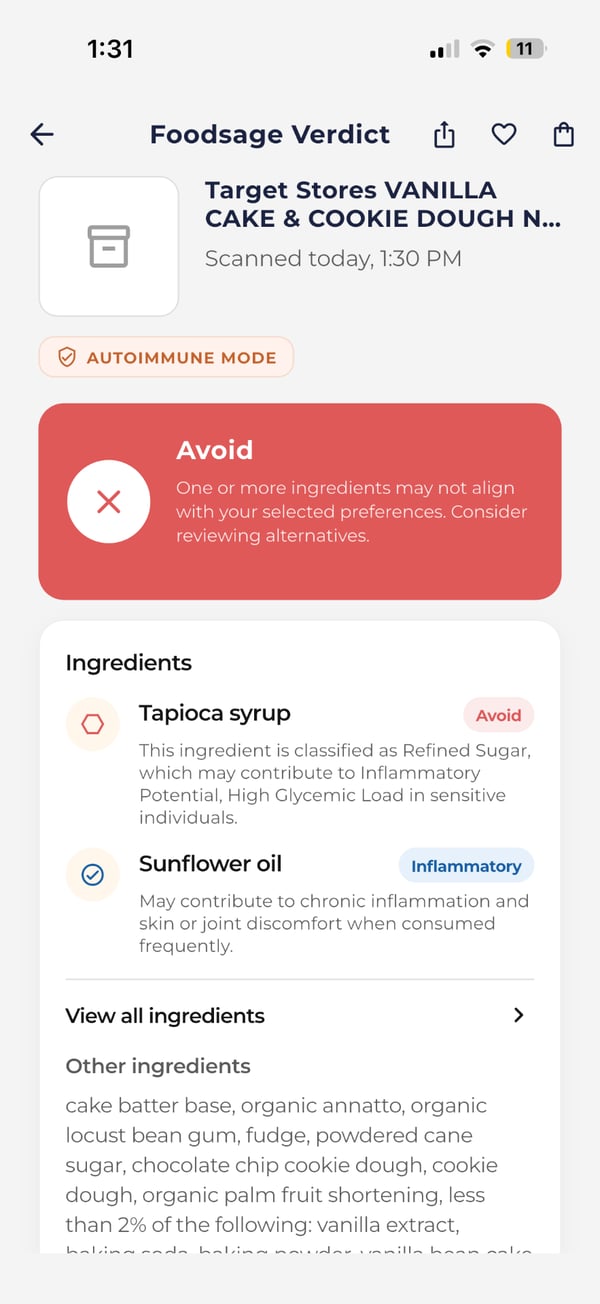
In Foodsage, choose PCOS during setup, then scan a product. Foodsage flags ingredients such as refined sugars against your profile and explains each one.
When to see a doctor or registered dietitian
See your doctor if your periods are irregular or absent, if you are trying to conceive, if you are worried about your blood sugar, or if you have a history of disordered eating. A registered dietitian can build an eating plan around your preferences, your other conditions and your goals, which is exactly the tailored approach the guideline recommends. Our diabetes foods to avoid guide covers the blood-sugar side in more detail.
Foodsage and the other MetricPoint apps are educational tools, not medical devices or medical advice. For decisions about your health, PCOS or a specific condition, talk to a qualified doctor or registered dietitian.
Continue reading
- Pillar guideAnti-Inflammatory Diet: What to Eat, What to Avoid and What the Evidence Shows
- GuideDiabetes: Foods and Drinks to Limit, per CDC, NIDDK and ADA
- GuideAnti-Inflammatory Diet Meal Plan: A 7-Day Sample Menu and Shopping List
- GuideAnti-Inflammatory Diet Recipes: 10 Simple Recipes Built on Whole Foods
- GuideFood additives to avoid: a guide to reading food labels
- GuideFood Diary Apps: What to Track and How to Pick One
Bring inclusive wellness benefits to your team.
MetricPoint gives employers a modern, everyday wellness benefit employees actually use.
Request Demo