
6 Month Old Eating Plan: A Simple First-Month Schedule for Solids
A realistic day-by-day plan for starting solids at 6 months — how much milk still matters, how many meals to offer, which first foods to try, and how to introduce allergens safely.
The first month of solids is less about nutrition and more about practice. Your baby is learning to move food around their mouth, swallow something that isn't milk, and sit through a meal. Milk still does the nutritional heavy lifting.
This plan is a starting shape, not a prescription. Babies vary widely in appetite and readiness. Nothing here replaces your pediatrician's advice, particularly if your baby was premature or has a diagnosed allergy.
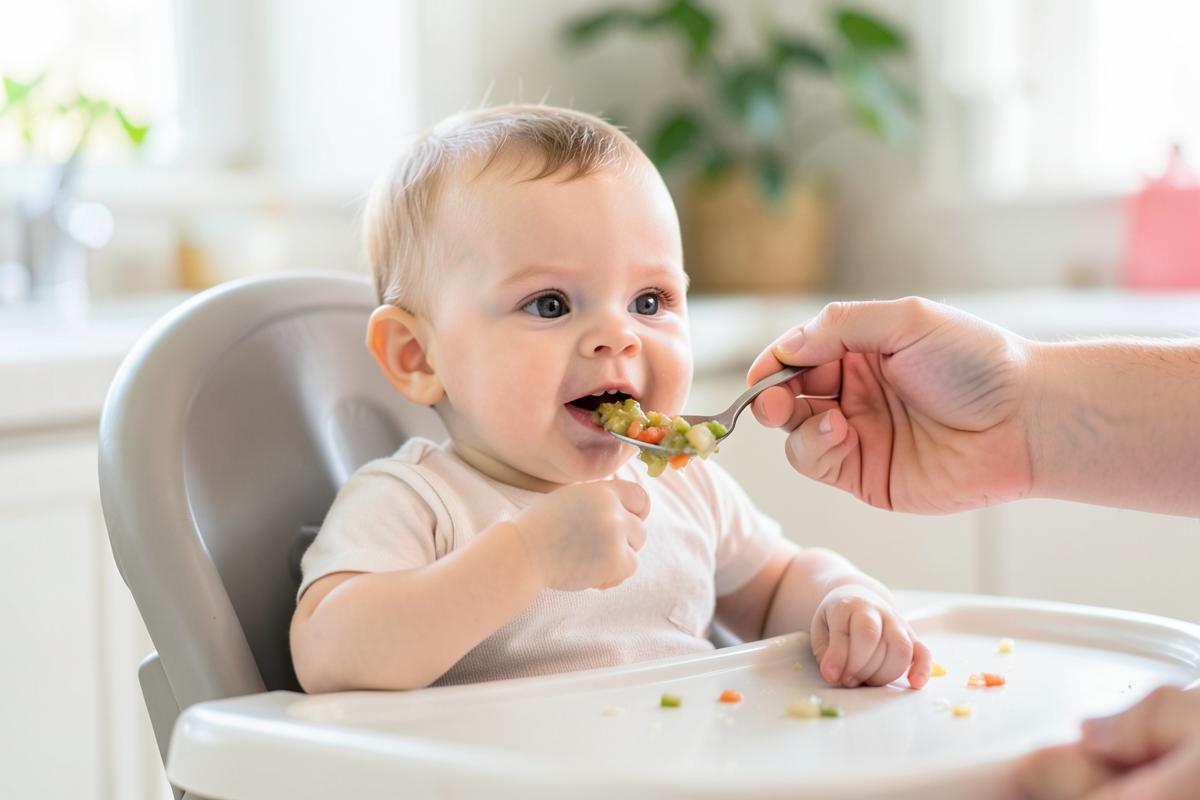
Is Your Baby Actually Ready?
Age is a rough guide; readiness signs are the real test. Before starting, look for all of the following:
- Sits upright with little or no support and holds their head steady.
- Opens their mouth toward a spoon or reaches for food.
- Moves food to the back of the mouth instead of pushing it straight back out.
- Has roughly doubled their birth weight.
If some signs are missing, wait a week or two. Starting before about 4 months is not recommended, and waiting much past 6 months isn't ideal either, because iron stores from birth are running low by then.
Week-by-Week: The First Month of Solids
Week 1 — one small meal a day
Pick a calm time of day when your baby isn't ravenous or exhausted — often mid-morning, about an hour after a milk feed. Offer one to two teaspoons of a single food. Expect most of it to end up on the bib. That's normal and not a rejection.
Good week-one options: iron-fortified oat cereal thinned with milk, pureed lentils, well-cooked mashed sweet potato, or soft avocado.
Week 2 — add a second flavor, keep one meal
Introduce a new single-ingredient food every two to three days so any reaction is traceable. Build toward one to two tablespoons per sitting. This is also the window to start allergens: a smooth peanut butter thinned with warm water, or well-cooked mashed egg.
Week 3 — two meals a day
Add a second meal, usually early evening. Start combining foods: cereal with mashed fruit, lentils with vegetables. Offer a few sips of water in an open cup with meals.
Week 4 — texture and routine
Move from smooth to slightly lumpy, and offer soft finger foods — steamed carrot sticks, soft-cooked pasta, strips of toast. Chewing practice with soft textures in this window helps later acceptance of family food.
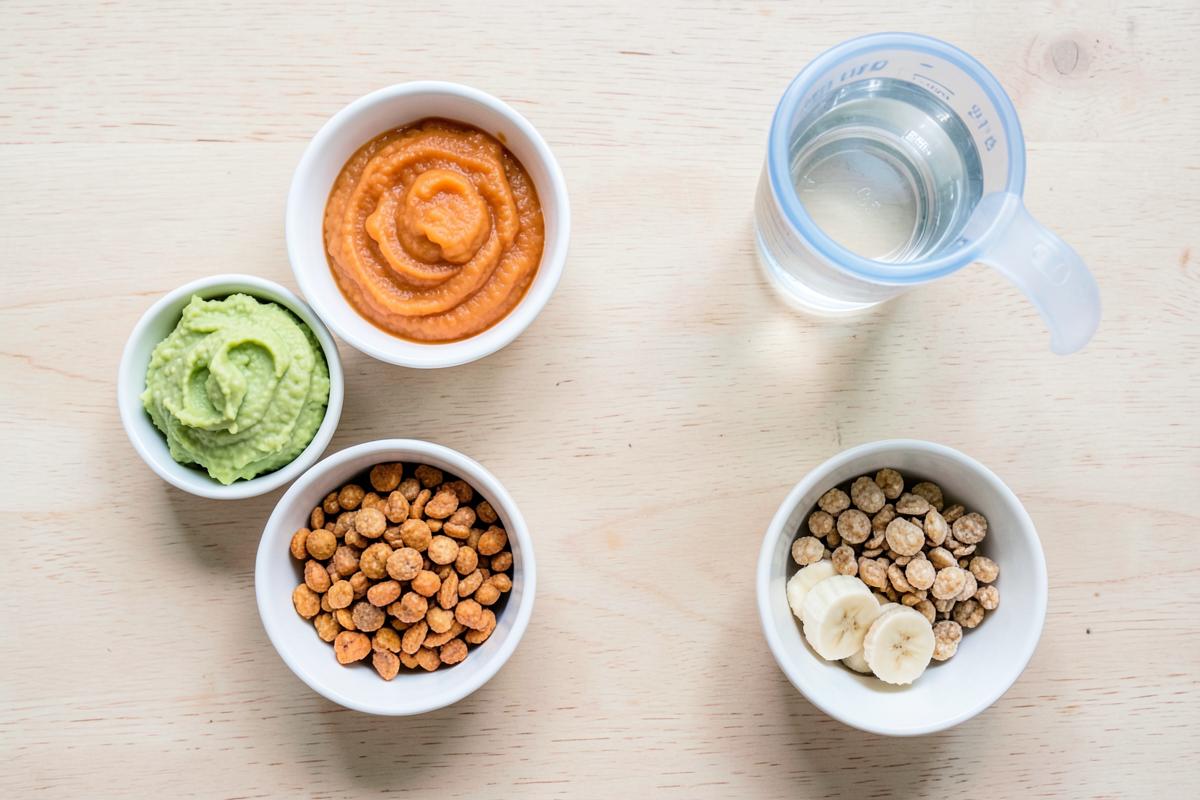
A Sample Day at the End of Month One
- On waking: milk feed.
- Mid-morning: breakfast — a few tablespoons of iron-fortified cereal with mashed fruit, plus water in a cup.
- Midday: milk feed.
- Mid-afternoon: milk feed.
- Early evening: dinner — soft-cooked lentils or minced meat with mashed vegetable, plus a soft finger food.
- Before bed: milk feed.
Total milk across the day stays in the region of 24–32 oz. If solids start displacing milk noticeably at this age, scale the solids back rather than pushing on.
Iron Is the Priority Nutrient
Infants aged 7–12 months need roughly 11 mg of iron a day — more than an adult man — because iron supports rapid brain development at this stage. Milk alone doesn't cover it once birth stores run down.
Practical sources: minced or pureed beef, lamb and chicken, lentils, beans, tofu, and iron-fortified infant cereal. Pairing plant sources with a vitamin C food — a little mashed pepper, broccoli, or fruit — helps absorption.
Introducing Allergens Without Drama
The old advice to delay allergens has been reversed. Introducing peanut, egg, dairy, wheat, soy, sesame and fish from around 6 months, and then keeping them in the diet regularly, is now the standard recommendation.
- Offer a new allergen at home, earlier in the day, when your baby is well.
- Start with a small taste and wait ten minutes before offering more.
- Keep it to one new allergen at a time.
- Once tolerated, feed it regularly — roughly twice a week — rather than dropping it.
- If your baby has moderate or severe eczema or an existing food allergy, ask your pediatrician before you start.
Foods to Keep Off the Tray
- Honey — botulism risk under 12 months.
- Cow's milk as a main drink before 12 months (small amounts in cooking or yogurt are fine).
- Added salt and added sugar, including salty stock cubes and sauces.
- Whole nuts, whole grapes, popcorn, hard raw carrot and apple — choking hazards.
- Unpasteurized milk, cheese, and juice.
- Rice cereal every single day — vary the grain (see our baby cereal guide).
When Meals Go Badly
Refusal, gagging, and spitting out are all part of normal learning. Gagging is a protective reflex and looks alarming but is not choking — a choking baby is silent. Learn the difference, keep your baby upright and supervised, and never feed a baby in a reclined car seat or while walking around.
A food refused today may be accepted on the tenth try. Keep offering without pressure; pressure is the fastest route to a fussy eater.
Check Any Pouch or Jar in Seconds
Store-bought baby food fits perfectly well into this plan — the question is which ones. LabelBaby scans the barcode or a photo of the nutrition panel and explains it in plain language: added sugars, sodium, whether the iron and protein claims hold up, and whether the texture suits your baby's current stage rather than the age printed on the front.
You can save a profile per child, including allergies, so the same pouch is graded differently for a six-month-old than for a toddler. More family food guides live on the MetricPoint blog.
Employers can offer LabelBaby and the rest of the MetricPoint suite as a family wellness benefit. Book a demo to see how it works.
Continue reading
Bring inclusive wellness benefits to your team.
MetricPoint gives employers a modern, everyday wellness benefit employees actually use.
Request Demo