
Best Foods for Your Skin: What the Evidence Says About a Glow Diet
The best foods for your skin, foods linked to breakouts, and what a glow diet can and can't do, with each claim graded by the strength of the research.
Quick answer: No single food gives you glowing skin, but your overall eating pattern matters. Vegetables, fruit, oily fish, nuts, seeds and whole grains supply nutrients skin uses, such as vitamin C and essential fatty acids. Small studies link high-glycemic foods and cow's milk to more acne in some people. Expect slow changes, not results in days, and keep using sunscreen.
Diet is one input to how your skin looks and feels, alongside genetics, sun exposure, hormones, skincare and medical conditions. The Linus Pauling Institute calls nutrition and skin a relatively new field of study and says dietary interventions may be limited in effect and slow to occur. This guide sorts what the research supports from what most "top 10 foods for skin" lists claim. It is general information, not medical advice.
What the research says about diet and skin
The overall pattern matters more than any one superfood
Most research looks at nutrients and eating patterns, not single foods. That is why lists that crown one berry or one seed as the secret to great skin go further than the evidence. A balanced pattern that covers the nutrients below is a safer bet than chasing any one ingredient.
The gut-skin connection is a research area, not a settled fact
A 2024 review in Cureus describes the health of the gut microbiota as "thought to influence skin health". That idea, often called the gut-skin axis, is being studied, but there is not yet good evidence that changing your gut through diet will change your skin. If you want the wider eating pattern that much of this research points toward, our anti-inflammatory diet guide covers it.
The best foods for your skin (and why)
Vitamin C foods
Citrus fruit, kiwi, red bell peppers, broccoli and strawberries are rich in vitamin C. A 2017 review in Nutrients explains that normal skin contains high concentrations of vitamin C, which supports collagen synthesis and helps protect against UV-induced photodamage. The same review notes that gaps in the evidence limit what we know about the benefits of eating more of it. The Linus Pauling Institute adds that UV light depletes antioxidants in the skin, including vitamin C.
Oily fish, walnuts, flax and chia
Salmon, sardines, mackerel, walnuts and ground flax supply omega-3 and other essential fatty acids. The Linus Pauling Institute says dry skin can stem from a lack of essential fatty acids, and the Cureus review lists omega-3 sources among the foods with a positive association in acne. These are associations from mostly small studies, not proof that fish oil clears skin.
Colorful vegetables and fruit
Tomatoes, carrots, sweet potatoes, leafy greens and berries carry carotenoids and other antioxidants. Some research has looked at whether they help protect skin from sun damage, but food is never a substitute for sunscreen. The Linus Pauling Institute points out that sunscreen alone may give only limited protection, so the sensible approach is both: protect your skin from the sun and eat plenty of produce.
Nuts, seeds, legumes and whole grains
These bring zinc, vitamin E and fiber, and they are lower on the glycemic scale than refined starches, which matters for the acne research below.
Foods to limit for clearer skin
Sugary and high-glycemic foods
This is the best-supported diet link to acne. A 2022 systematic review in JAAD International of 34 studies concluded that high glycemic index, high glycemic load and carbohydrate intake have "a modest yet significant" effect on acne, supported by randomized trials. The American Academy of Dermatology is more cautious: it says findings from small studies suggest a low-glycemic diet may reduce acne, that other studies found no connection, and that more research is needed. The Cureus review cites a trial in which a 10-week low-glycemic-load diet improved acne.
In practice that means fewer sugary drinks, sweets and white-flour snacks, and more of the whole foods above. Added sugars hide under many names on labels, such as high-fructose corn syrup, raw sugar and grape sugar. Our belly fat guide covers the wider research on added sugars.
Cow's milk, especially skim, and whey protein
The American Academy of Dermatology says cow's milk may be linked to an increase in breakouts, with skim milk showing the strongest association, and that there is no evidence yogurt or cheese increases breakouts. The JAAD International review calls the dairy evidence mixed and says it may depend on sex, ethnicity and dietary habits. The Cureus review lists whey protein powder among foods with a negative association in acne. If you suspect milk, try changing one thing at a time rather than cutting out all dairy.
There is no proven elimination diet for skin
The Cureus review notes that elimination diets "lack strong evidence" for the skin conditions it covers. Cutting out whole food groups can make it harder to get the nutrients your skin needs. Talk to a dermatologist or registered dietitian before you do.
Is there a diet for glowing skin in 3 days?
No. The Linus Pauling Institute describes dietary effects on skin as slow to occur, and no diet has been shown to transform skin in three days. Treat any plan that promises a visible glow in a long weekend as marketing. What you can do this week is start the habits that matter over months:
- Add a vegetable or fruit to every meal, including one vitamin C source a day.
- Eat oily fish twice a week, or walnuts and ground flax if you don't eat fish.
- Swap sugary drinks for water or unsweetened tea.
- Check snack and drink labels for added sugars.
- Keep using sunscreen. Food does not replace it.
A sample day of skin-friendly eating
- Breakfast: oats cooked with milk or a plant milk, topped with kiwi or strawberries and a spoon of ground flax.
- Lunch: a big salad with leafy greens, red bell pepper, chickpeas, olive oil and lemon, plus a slice of whole-grain bread.
- Snack: a handful of walnuts and an orange.
- Dinner: baked salmon with roasted sweet potato and broccoli.
These are ordinary foods, not superfoods or supplements. For more meals built on the same pattern, see our anti-inflammatory diet meal plan and anti-inflammatory recipes.
How to check labels for skin-unfriendly ingredients

Packaged foods are where added sugars and refined starches are easiest to miss. On the Nutrition Facts panel, look at the Added Sugars line rather than the front-of-pack claim. In the ingredient list, watch for syrups, names ending in "-ose" and malt, and for milk solids or whey if you are testing whether dairy affects you. Our guide to food additives to avoid covers label reading in more depth.
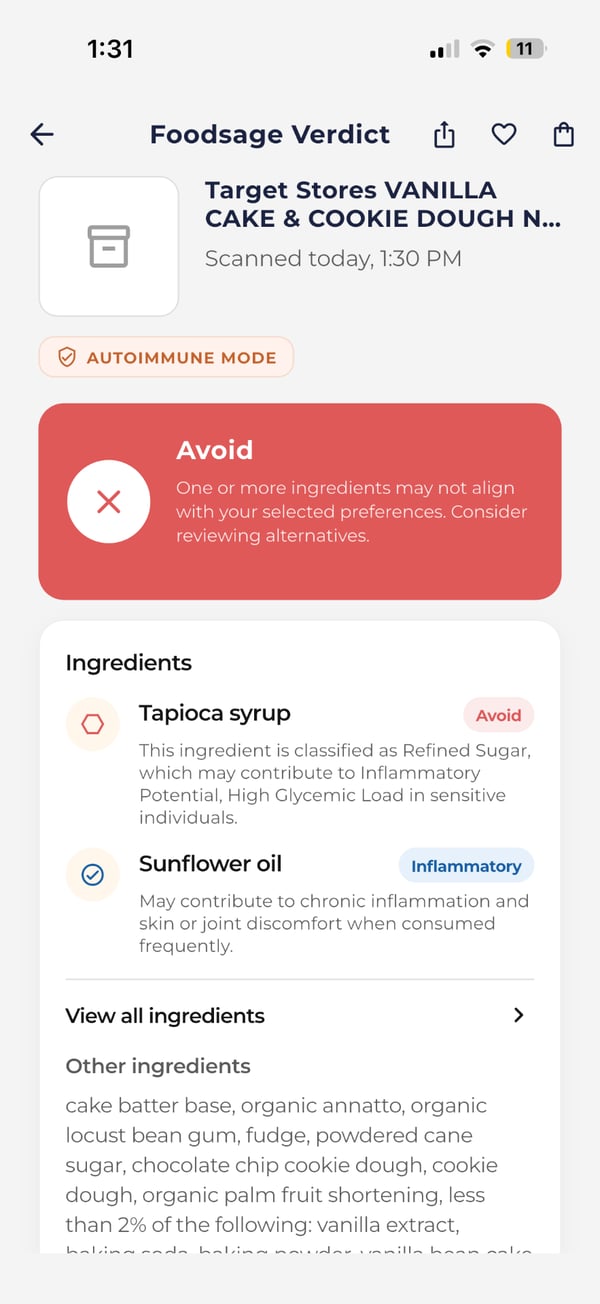
Foodsage can do the checking for you. Scan a product and it flags ingredients such as refined sugars against the profile you set up, and its personalized weekly meal plans can follow the same eating pattern. If you want to see whether certain foods line up with breakouts, a food diary app helps you log meals and symptoms over a few weeks.
When to see a dermatologist
See a dermatologist for acne that is painful, scarring or not improving, for eczema or psoriasis flares, for sudden changes in your skin, or for skin changes that come with other symptoms. Diet changes can sit alongside treatment, but they don't replace it.
Foodsage and the other MetricPoint apps are educational tools, not medical devices or medical advice. For decisions about your health, your skin or a specific condition, talk to a qualified doctor, dermatologist or registered dietitian.
Continue reading
- Pillar guideAnti-Inflammatory Diet: What to Eat, What to Avoid and What the Evidence Shows
- GuideAnti-Inflammatory Diet Meal Plan: A 7-Day Sample Menu and Shopping List
- GuideAnti-Inflammatory Diet Recipes: 10 Simple Recipes Built on Whole Foods
- Pillar guideHow to Reduce Belly Fat: What Works, What Doesn't and Where Inflammation Fits
- GuideFood additives to avoid: a guide to reading food labels
- GuideFood Diary Apps: What to Track and How to Pick One
Bring inclusive wellness benefits to your team.
MetricPoint gives employers a modern, everyday wellness benefit employees actually use.
Request Demo